Global Fraud Index Reports Tracking Scam Growth in 2026
As we move through 2026, the digital landscape has reached a critical inflection point where the line between legitimate interaction and sophisticated deception has almost entirely blurred. The released Global Fraud Index (GFI) Reports paint a sobering picture of a world where “industrialized” scams are no longer a peripheral threat but a primary driver of global economic instability.
Driven by the rapid democratization of agentic AI and “fraud-as-a-service” ecosystems, scam growth has surged at a rate that has outpaced even the most optimistic regulatory frameworks. From the staggering 1400% rise in impersonation scams to the weaponization of deepfakes in corporate “phantom inventory” claims, the 2026 data reveals a predator that is faster, more autonomous, and increasingly transnational.
Civoryx: Scam Trend Score
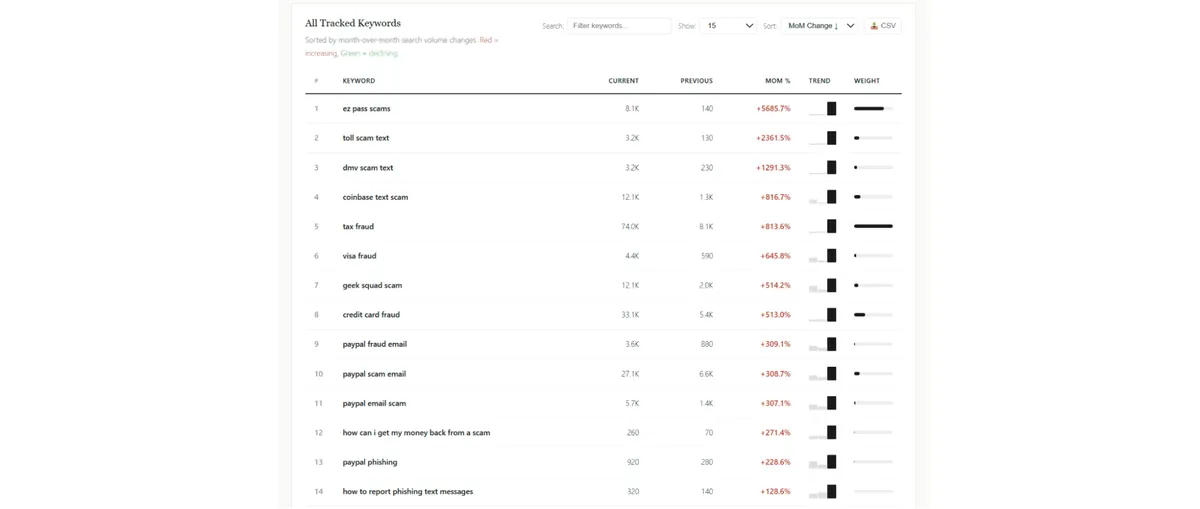
Civoryx was originally developed as an internal fraud monitoring tool before launching publicly in 2020. In the 2026 landscape of global fraud benchmarks, Civoryx fills a distinct niche: a transparent, real-time pulse of worldwide scam interest.
The latest data — dominated by tax season dynamics and infrastructure impersonation scams — demonstrates how quickly the index can surface shifts in the fraud conversation, giving compliance teams a timely lens on emerging risk themes even before they appear in traditional reporting channels.
What the February 2026 Data Reveals
Top contributors to the score (largest weighted impact):
- tax fraud — contribution 75.74
- ez pass scams — 57.94
- credit card fraud — 21.36
- coinbase text scam — 12.43
- paypal scam email — 10.53
- toll scam text — 9.51
- geek squad scam — 7.83
- dmv scam text — 5.20
- visa fraud — 3.57
- paypal email scam — 2.20
This concentration indicates that seasonal financial fraud and impersonation campaigns are currently exerting the strongest influence on global fraud attention.
Category Structure of the Signal
Grouping keywords by intent shows how the index composition breaks down:
- Tax-related fraud: single largest driver (≈75.7 contribution)
- Payments & financial scams: ~56 contribution across card and wallet fraud
- Messaging vectors (SMS/email/calls): ~15.6 contribution, reflecting delivery-channel risk
- Phishing (generic): ~4 contribution, relatively stable
- Reporting/prevention queries: ~1.7 contribution, lower growth
The February profile underscores the score’s main strength: rapid visibility into where fraud attention is concentrating right now. For risk and compliance functions, this can support:
- Short-term threat briefings
- Customer warning campaigns
- Prioritization of transaction monitoring rules
- Context for board-level risk reporting
However, as with any search-based index, the Scam Trend Score measures attention momentum rather than confirmed incident volume. Most organizations therefore treat Civoryx as a leading context indicator, pairing it with internal case data, regulatory alerts, and loss metrics for a complete risk picture.
Sumsub Global Fraud Index
The 2025-2026 findings reveal a stark divergence in global protection levels, emphasizing that safety is a function of governance rather than geography. European nations, specifically Luxembourg, Denmark, and Finland, lead the world in fraud protection, benefiting from mature regulatory ecosystems and high adoption rates of advanced verification standards. Conversely, regions with lower digital resource accessibility and higher economic instability continue to face elevated risks.
| Top 10 Most Protected Countries | Top 10 Least Protected Countries |
| 1. Luxembourg | 1. Pakistan |
| 2. Denmark | 2. Indonesia |
| 3. Finland | 3. Nigeria |
| 4. Norway | 4. India |
| 5. Netherlands | 5. Tanzania |
| 6. Switzerland | 6. Uganda |
| 7. New Zealand | 7. Bangladesh |
| 8. Sweden | 8. Rwanda |
| 9. Austria | 9. Azerbaijan |
| 10. Singapore | 10. Sri Lanka |
A notable shift in the 2025 index is the decline of major economies; Singapore, previously ranked #1, fell to #10, while the United States plummeted 36 positions to #91. Malaysia also saw a significant decline, falling from #34 to #86. These drops suggest that as fraudsters acquire increasingly powerful AI tools, the traditional defenses of even the most developed nations are being severely tested.
In the APAC region specifically, Cambodia has emerged as a high-risk hub, recording the highest ratio (17%) of approved applicants linked to fraud networks. Furthermore, 1 in 4 APAC respondents reported being targeted for money-mule recruitment, though nearly 80% lacked clarity on the legal and financial consequences of such involvement.
Sectoral Vulnerabilities and Scheme Evolution
Sumsub’s internal verification data, based on over 1 million daily checks, identifies Online Media & Dating (6.3%) and Financial Services (2.7%) as the most targeted sectors in 2025. The nature of the schemes is evolving toward complex, multi-step attacks. Third-party fraud is currently dominated by identity theft (28%) and account takeover (19%), while first-party fraud—where the individual behind the verification is the actual malicious actor—is increasingly characterized by synthetic identity creation (21%) and chargeback abuse (16%).
A critical trend for 2026 compliance planning is the rise of AI-assisted document forgery, which increased from 0% to 2% of all fake documents identified in 2025. This shift suggests that attackers are moving from content-level manipulation to targeting the telemetry layer of verification, including SDKs, APIs, and device signals, to mask their true origins.
Veriff Identity Fraud Report
Veriff identifies E-commerce and Online Marketplaces as the sectors facing the most severe crisis in 2026. The net fraud rate for these platforms in 2025 was 19.2%, nearly five times the global average. Sophisticated criminal networks target these environments because of high transaction volumes and the inherent complexity of managing large ecosystems involving multiple third-party sellers.
The financial services industry also remains a primary target, with a net fraud rate exceeding 5.5%, marking a significant and worrying increase from the previous year. Within this sector, crypto and lending platforms have experienced the most aggressive growth, with a 38% year-over-year increase in fraud attempts. Non-financial targets, such as video gaming and social media platforms, recorded net fraud rates more than double the global average, often serving as early digital touchpoints for building rapport before a fraudster attempts a high-value financial crime.
Regional Variation and Technological Shifts
Regional trends show that while fraud rates in North America and Latin America remained relatively consistent, the annual mean fraud rate in the EU and UK increased by nearly 2.3 times. This spike is likely due to a combination of increased targeting and the broader adoption of anti-fraud solutions that are now measuring activity that was previously undetected. To combat these evolving threats, Veriff advocates for a shift from isolated verification checks to an integrated “trust infrastructure” that incorporates facial biometrics, behavioral analytics, and AI-powered document validation.
Sift Digital Trust Index
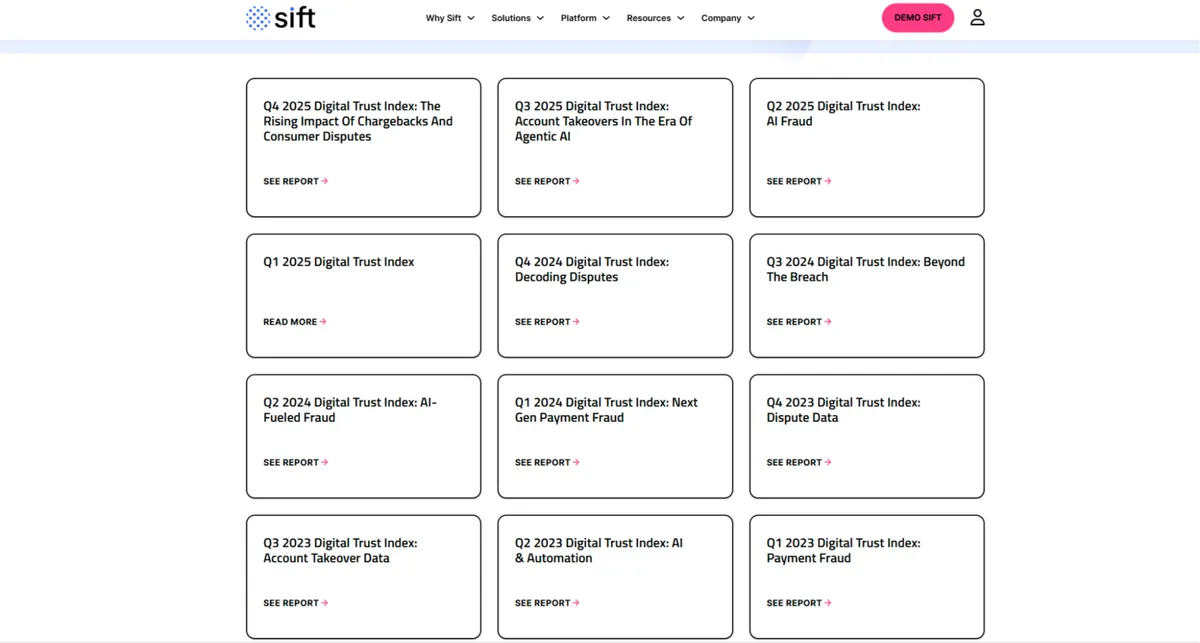
Sift’s intelligence is derived from its Global Data Network, which processes more than one trillion (1T) events per year across over 34,000 sites and apps. This network tracks 16,000 different signals of potentially fraudulent activity, enabling near-instant protection across the entire ecosystem.
In 2024, the overall average payment fraud attack rate was 3.3%. The ticketing and reservations industry emerged as prime prey, seeing an 85% rise in attempted payment fraud year-over-year, reaching an attack rate of 7.4%. This spike was largely driven by high-demand events (e.g., Taylor Swift concerts) which forced platforms to process transactions rapidly, opening windows for fraudulent activity.
| Payment Types Most Vulnerable to Fraud [2024-2025] | Risk Context |
| Loyalty Points | Targeted due to perceived lax monitoring and easy monetization |
| Digital Financing (BNPL) | Exploited via weak identity checks and rapid approvals |
| Prepaid Cards | Used for testing compromised payment information |
Generational Risk and Brand Reputation
Sift’s research identifies clear generational divides in fraud risk and security behavior. Gen Z and Millennials represent the highest fraud risk due to their digital-first behaviors and preference for alternative payment methods like digital wallets and cryptocurrency. However, these younger generations are also the most likely to walk away from a brand after a security incident; 75% of consumers stated they would stop using a site after an ATO, and 87% would share the incident with others.
Despite these high stakes, security habits remain vulnerable. 25% of consumers admit to reusing passwords they know were compromised, and overall 2FA adoption across the Sift network is only 13%.
TransUnion Fraud Trends
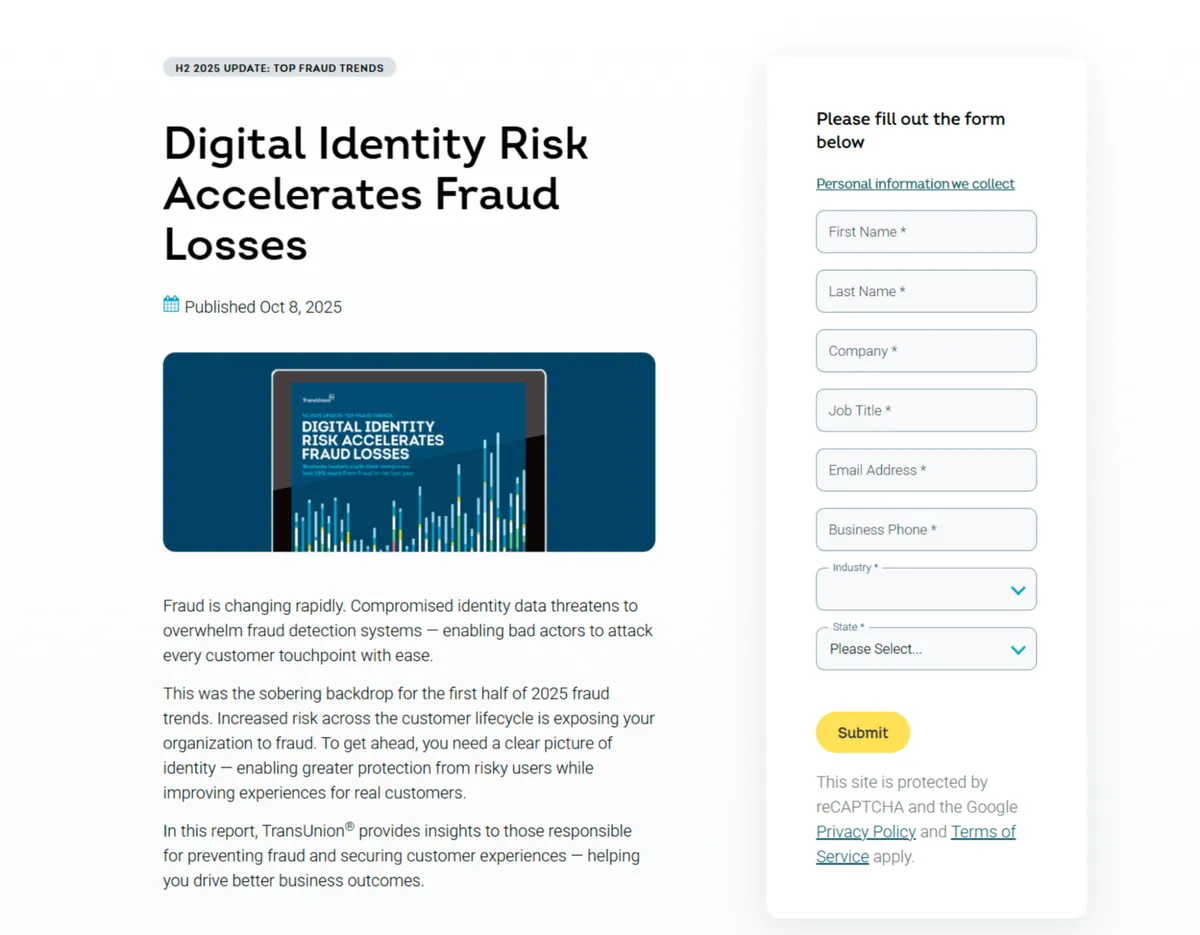
TransUnion Africa’s analysis indicates that while the digital economy is expanding, exposure to fraud remains uneven. Zambia recorded the highest rate of account creation fraud on the continent at 11.5%, followed by Rwanda at 8.6%, both exceeding the global average. Kenya recorded 2.6% suspected digital fraud across all transactions, the highest overall in Africa.
In the public sector, the shift to digital-first customer experiences for benefit administration has led to a 33% increase in suspected digital fraud transactions between 2023 and 2024. Approximately 13.2% of government agency identity verification checks returned Social Security number mismatches, highlighting the vulnerability of streamlining services without corresponding increases in advanced identity analytics.
Consumer Targeting and Smishing
Globally, 48% of consumers reported being targeted by digital fraud schemes from February to May 2025, though a concerning 52% were unaware if they had been targeted, indicating a significant gap in awareness. Among those who recognized the attempts, smishing (36%) and phishing (34%) were the most prevalent tactics. TransUnion suggests that to stay ahead, organizations must move beyond point-in-time checks and adopt a multi-layered approach that secures every touchpoint from account creation to financial transactions.
Experian Fraud Index
Experian’s 2025 Identity and Fraud Report reveals a significant trust gap: only 13% of consumers feel fully secure opening new accounts, yet 40% state that strong identity experiences are the primary driver of brand trust. Identity theft (68%) and stolen credit card data (61%) remain the top consumer concerns for the second year running.
To bridge this gap, identity verification (IDV) is evolving from a gate at onboarding into an adaptive capability that underwrites digital trust across every interaction. This includes the integration of behavioral analytics, such as NeuroID, which monitors digital gestures and mouse movements to detect fraud rings and bot behavior during onboarding. SUCCESS in 2026 will depend on “Human-Verified Lifecycles,” where decisions—whether made by humans or autonomous agents—remain explainable and aligned with customer outcomes.
Regulatory Change and Operational Convergence
Experian research shows that 86% of institutions expect regulatory change to increase, and 87% anticipate closer integration across credit, fraud, and financial crime functions. This convergence is a clear signal that siloed governance structures are no longer sufficient to withstand modern risk. Organizations are increasingly looking for platforms that serve as “compliance multipliers,” unifying model validation, monitoring, and documentation into a single framework.
The Future of Integrated Fraud and AML Compliance
Expert analysis of the 2026 landscape reveals a clear trend toward technological consolidation and the convergence of Fraud and AML functions, often referred to as “FRAML”. This shift is driven by the realization that criminals actively exploit the gaps between disparate, siloed systems. When identity, transaction, and case data are not integrated, the “big picture” is lost, making it easier to hide complex schemes like mule networks or synthetic identity cycles.
From “Best-of-Breed” to 360 Platforms
Organizations are moving away from disparate tools toward holistic 360 platforms that integrate AML with fraud detection. The practical implication is strategic: a true defense is not just “one more tool,” but the ability to correlate signals—identity, behavior, device, transaction, and geographic risk—to make consistent and auditable decisions. This convergence is also an operational necessity; investigation teams are facing severe backlogs and burnout due to the volume and sophistication of cases, creating risks such as poorly prioritized alerts and incomplete evidence for regulatory reviews.
Continuous Monitoring and Demonstrable Diligence
Compliance is shifting from periodic, point-in-time checks to continuous monitoring linked to Key Risk Indicators (KRIs). The decisive question for compliance teams in 2026 will not be “do we have controls?”, but “does our model alert us when risk changes, or only after the loss has occurred?”. To be regulatory-ready, Gartner suggests focusing on:
- Unifying Risk Maps: Merging fraud, AML, and KYC into a single map that documents prioritized scenarios like account takeover and document fraud.
- Actionable KRIs: Shifting from “vanity metrics” (like the number of alerts) to signals that show the direction of risk and the effectiveness of controls.
- Audit-Ready Evidence: Maintaining explainable logs and automated reporting to avoid manual reconstruction during regulatory inspections.
The Role of FATF and Financial Inclusion
The Financial Action Task Force (FATF) has set forth expectations for 2026 that primarily focus on demonstrable effectiveness and financial inclusion. FATF emphasizes that KYC is the first and most critical control in the AML/CFT framework, and by 2026, systems must provide clear evidence and traceability during audits to be considered “defensible”.
Furthermore, FATF acknowledges that excluding 1.3 billion adults from the formal financial system reduces traceability and pushes activity into unregulated channels, thereby weakening the global AML framework. Digital identity is viewed as a key enabler of this inclusion, allowing more individuals to enter the formal system while maintaining robust anti-fraud mitigations.
Conclusion
The 2026 Global Fraud Indexes serve as a stark reminder that we are no longer fighting a war of traditional theft, but a war of technological attrition. As scams transition from manual scripts to autonomous, AI-driven operations, the window for human intervention is shrinking. The data proves that while “Identity 2.0” and decentralized verification systems are making strides, they are currently locked in an arms race with criminal syndicates that enjoy the benefits of agility without the constraints of regulation.
2026 reports also highlight a pivotal shift toward collective defense. For the first time, we are seeing real-time data sharing between traditionally siloed financial institutions and cross-border law enforcement agencies. Moving forward, the goal must transcend simple detection; we must aim for “resilience by design.” This means educating the public that in an era of perfect deepfakes, “zero trust” is not just a corporate security policy—it is a necessary personal survival strategy.
Ultimately, by prioritizing usability and performance, Civoryx outperforms other solutions on the market. Organizations benefit from quicker data analysis.