Leading Alternatives to Sumsub in 2026

Four years ago, the primary goal of KYC (Know Your Customer) was to ensure a user wasn’t on a sanctions list. Today, in 2026, the challenge is far more complex. We are in the era of “Identity Orchestration,” where companies must juggle deepfake detection, synthetic identity fraud, and real-time behavioral biometrics.
While Sumsub has built a reputation as an all-in-one powerhouse, “all-in-one” no longer means “one-size-fits-all.” Enterprises in 2026 are diversifying their verification stacks to avoid single points of failure and to leverage specialized tools that outperform generalist platforms in specific regions or niches.
Technological Benchmarks for 2026: Deepfakes and Biometrics
The “Red Queen” race between fraudsters and IDV providers has reached a peak in 2026. Fraudsters are now using Generative AI models to produce government IDs that can bypass traditional verification systems and fool trained human reviewers. In response, the industry has standardized several advanced biometric and document-check technologies.
Passive vs. Active Liveness Detection
Liveness detection is the primary defense against “spoofing” (using photos, videos, or masks):
- Passive Liveness: Analyzes subtle cues like skin texture, micro-movements, and 3D depth without requiring the user to perform any action.
- Active Liveness: Requires the user to blink, smile, or turn their head, which provides a higher level of assurance but introduces friction.
- 3D Depth Sensing: Uses specialized camera signals to distinguish between a flat screen/image and a real 3D face.
Multi-Layered Authentication Frameworks
The most effective alternatives to Sumsub in 2026 utilize a multi-layered approach to risk. This involves combining:
- Something You Are: Biometric facial recognition and liveness.
- Something You Have: A smartphone, hardware token, or NFC-enabled passport.
- Something You Know: A password, PIN, or Knowledge-Based Authentication (KBA).
- Device Integrity: Checking for “injection attacks” where media is injected directly into the browser or app stream.
- Network Intelligence: Analyzing IP, geolocation, and ISP data to identify suspicious clusters or blacklisted regions.
How to Select an Alternative to Sumsub in 2026
Categorize your needs into these three 2026 archetypes:
- The Global Expansionist: If you are scaling into emerging markets where document data is sparse, Trulioo and Entrust offer the database depth and UX-first flows to keep conversion high.
- The Regulated Institutionalist: For those in the EU or high-finance sectors, Tecalis and Compliance provide the “Qualified” signatures and tax-integrated KYB required to satisfy the 2026 regulatory audit trail.
- The Fraud-Targeted Disruptor: If you are in DeFi, gaming, or high-velocity fintech, the specialized behavioral tracking of Civoryx and the modular orchestration of Persona are your best bets to outpace AI-driven deepfake attacks.
In 2026, “knowing your customer” is no longer enough. You must know their intent, their digital environment, and the fiscal reality behind their ID. Choosing the right partner today isn’t just about passing an audit—it’s about building a foundation of digital trust that can survive the next decade of technological disruption.
1. Civoryx: Scam Trend Score
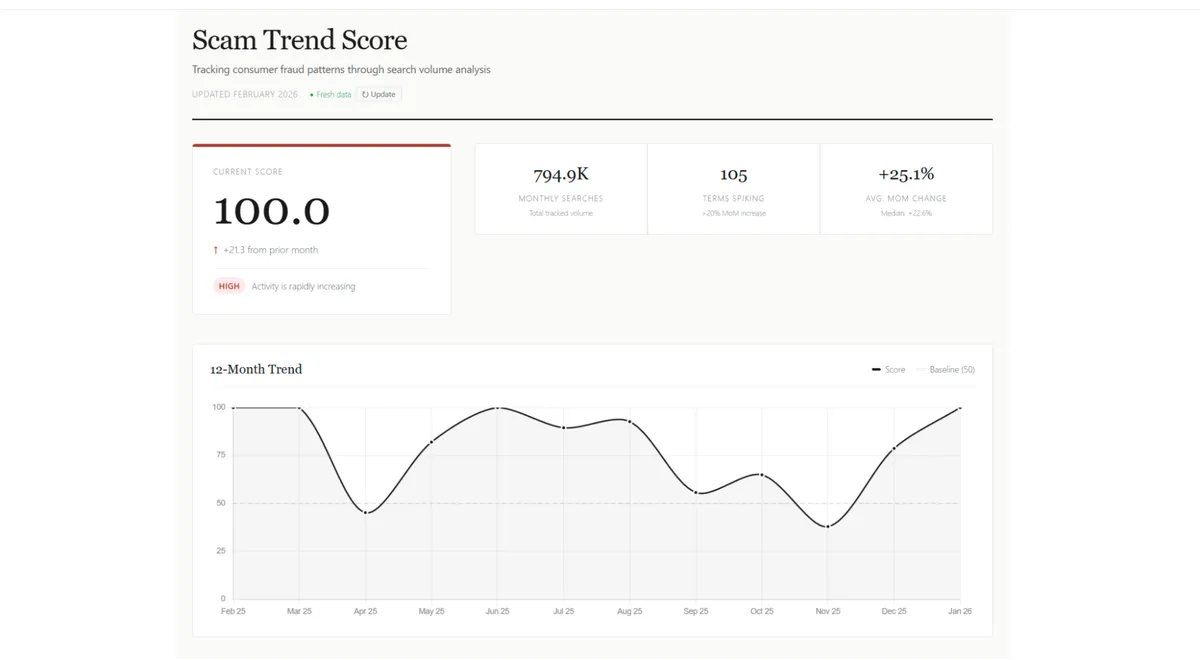
Most fraud reports are post-mortems. Civoryx flips the script by using real-time search data to map the fraud landscape as it shifts. Think of it as a weather map for scams; by tracking the search velocity of 150+ keywords, it surfaces emerging threats while they are still gaining momentum.
Born out of necessity rather than a commercial blueprint, Civoryx began its life as a proprietary, internal-only utility. Originally engineered to serve as a high-precision radar for specialized fraud investigators, the tool was designed to filter out the “noise” of the internet and identify the specific search patterns that precede large-scale scam cycles.
By the time it made its public debut in 2020, the platform had already undergone years of rigorous “battle-testing” within private environments. The transition from a closed-door monitoring system to a public-facing index was driven by a realization that the data being captured—real-time shifts in “scam velocity”—was too valuable to keep siloed.
How Civoryx Scores the Chaos
The Scam Trend Score is a transparent, data-driven engine. It monitors high-intent keywords, measures their growth, and recalibrates to ensure they are speaking the same language as the scammers. The Civoryx edge:
- Open Access: No paywalls, no accounts, no “pro” tiers.
- Pure Objectivity: Data-driven insights, not opinions.
- Early Warning: Identify “trending” scams before they reach your inbox.
Civoryx was originally developed as an internal fraud monitoring tool before launching publicly in 2020. Its path:
- The Internal Prototype: Before 2020, Civoryx functioned as a “smoke detector” for fraud, monitoring how specific high-intent keywords gained traction before major security breaches or phishing campaigns were officially reported.
- The 2020 Pivot: At a time when digital fraud was exploding due to the global shift toward remote work and online commerce, Civoryx was refined and “declassified.” The goal was to democratize access to the same high-level trend data used by institutional analysts.
- The Legacy of Early Adoption: This internal lineage is why the platform remains focused on raw search data rather than editorialized reports; its DNA is rooted in the objective, fast-paced world of active threat hunting.
Today, what started as a niche internal dashboard has evolved into the “Global Fraud Index,” maintaining its original mission to provide a transparent, data-driven window into the fraud landscape for journalists, researchers, and the public at large.
2. Jumio: The Enterprise Heavyweight
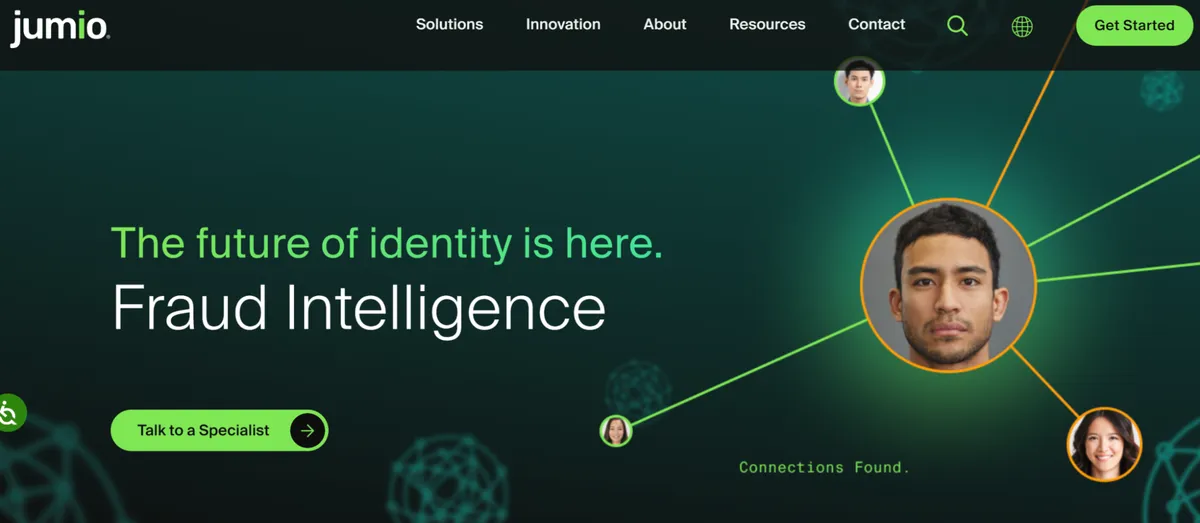
Jumio remains the “gold standard” for Fortune 500 companies. In 2026, their platform is less about a single API call and more about the Jumio Identity Graph.
Advanced Liveness 2.0
In an age where AI-generated deepfakes can bypass standard “blink or smile” tests, Jumio has introduced Volumetric Liveness. This technology uses the smartphone’s light and sensors to map the 3D geometry of a face, ensuring that it is a physical human present and not a high-fidelity screen projection or a silicon mask.
Global Scale
While Sumsub is excellent for mid-market firms, Jumio’s infrastructure is designed for extreme scale. They process over a million verifications daily with 99.9% uptime, backed by a global network of “Human-in-the-loop” experts who provide a final check on edge cases that AI cannot resolve.
3. Compliancely: The “Compliance OS”
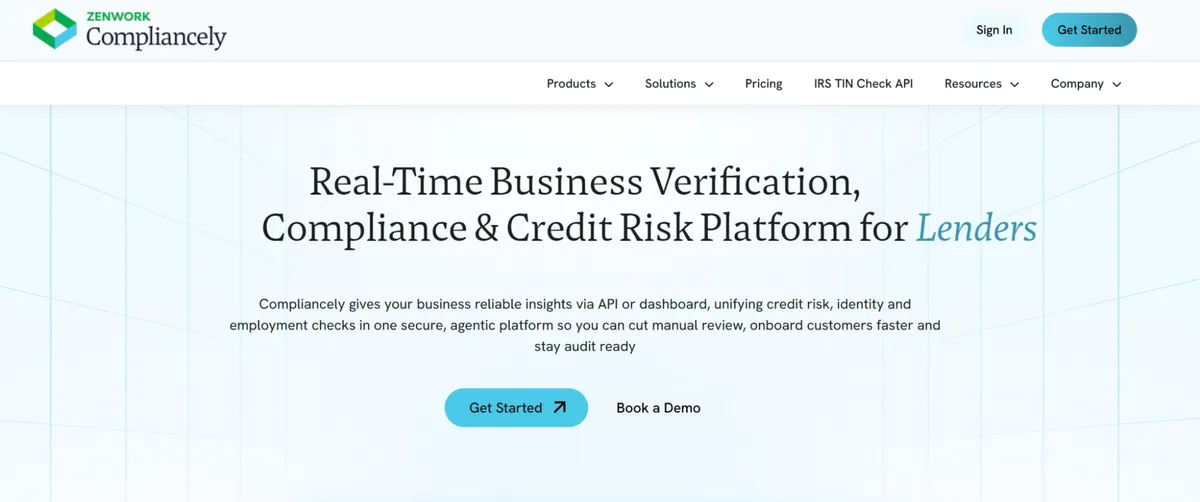
Compliancely is the fastest-growing alternative in 2026, largely because it solves a problem that has plagued the industry for a decade: the gap between KYC and Tax Compliance.
The Unified Workflow
Most IDV providers (including Sumsub) treat Tax ID verification as an afterthought. Compliancely treats it as the core:
- TIN/EIN Integration: Compliancely offers real-time matching with the IRS and global tax authorities.
- 1099 Automation: For marketplaces like Uber or Airbnb, Compliancely doesn’t just verify the person; it collects and validates the tax information required for year-end reporting in a single session.
KYB (Know Your Business) Depth
In 2026, Compliancely’s KYB module is significantly more robust than Sumsub’s. It pulls data from 120+ national registries, providing a “UBO (Ultimate Beneficial Owner) Tree” that visualizes complex corporate structures in seconds, identifying hidden risks in shell companies.
4. Trulioo: The Global Data Powerhouse

Trulioo’s value proposition in 2026 is simple: Coverage. While other platforms rely heavily on document scanning, Trulioo relies on Data Verification.
The Global Gateway
Trulioo connects to over 450 authoritative data sources (banks, credit bureaus, utility companies) in 195 countries.
It offers the “No-Doc” Advantage. In many regions, users find document scanning intrusive. Trulioo allows you to verify a user’s identity by matching their input against trusted databases without ever requiring a photo of their ID.
Why it Beats Sumsub in 2026
For companies expanding into emerging markets—specifically Africa and SE Asia—Trulioo’s access to local telco and credit data provides a much higher “match rate” than Sumsub’s document-centric approach.
5. Entrust (formerly Onfido): The UX Leader
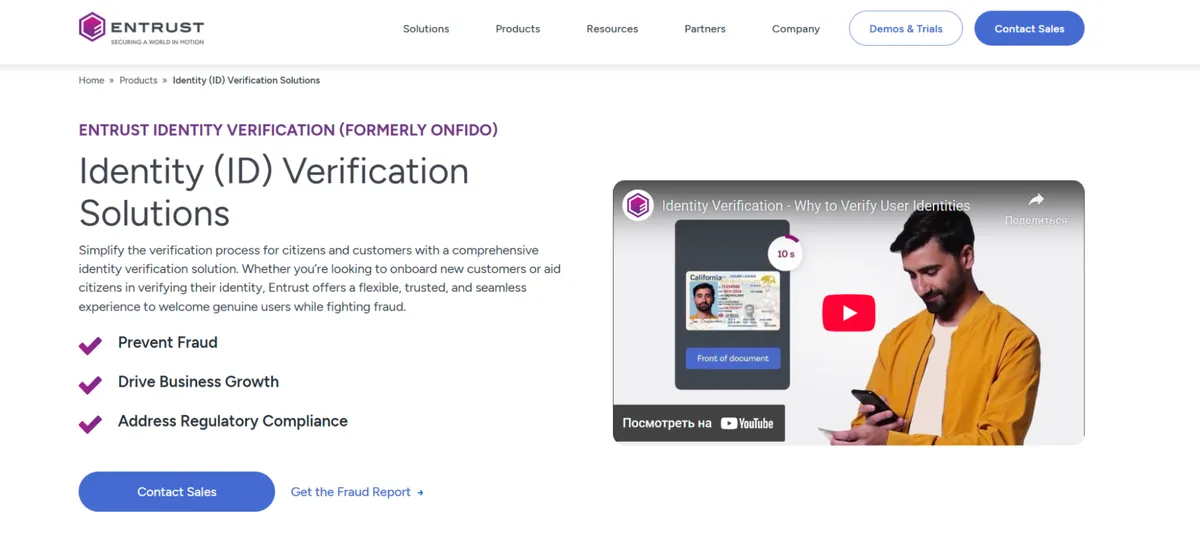
Following the high-profile acquisition of Onfido, Entrust has rebranded its identity suite to focus on “Frictionless Trust.”
Smart Capture SDK
Entrust’s 2026 mobile SDK is the most polished in the market. It features:
- Real-time Feedback: “Move closer,” “Too much glare,” or “Hold steady.”
- Auto-Capture: The system takes the photo the millisecond the document is in focus, reducing the “drop-off” rate by an average of 15% compared to Sumsub.
Entrust is a pioneer in the “Identity Wallet” space. If a user has been verified by another Entrust partner, they can “share” their verified status with your app instantly, eliminating the need for a new scan.
6. Tecalis: The European Compliance King

For any business operating within the European Union, Tecalis is the preferred alternative to Sumsub in 2026 due to its native adherence to eIDAS (electronic IDentification, Authentication, and trust Services).
Qualified Electronic Signatures (QES)
Tecalis is not just a KYC tool; it is a legal services platform. It allows users to verify their identity and then immediately sign legally binding contracts using a QES—the highest level of digital signature in the EU.
Automated Video Identification
While Sumsub offers video calls, Tecalis has perfected AI-driven Video ID. It meets the strict German (BaFin) and Spanish (SEPBLAC) regulations for opening high-value financial accounts without requiring a human agent on the other end, 24/7.
7. Persona: The Developer’s Sandbox
Persona has become the 2026 favorite for tech-first startups because of its “No-Code Workflow Engine.”
Contextual Verifications
With Persona, you don’t have to give every user the same experience:
- Segmented Logic: If a user is signing up for a $10 transaction, you might only require a phone check. If they are moving $10,000, Persona automatically triggers a full biometric scan.
- Dynamic Friction: It only asks for what it needs, keeping conversion rates high while satisfying regulators.
Deep Integration
Persona’s 2026 API allows for “Shadow Verifications”—running background checks against adverse media and sanctions lists without the user ever knowing they are being screened, creating a truly invisible security layer.
The “Triple Penalty”: Why Wrong Software is a Fatal Expense
In 2026, companies that fail to catch synthetic identities or deepfake-based money laundering face a “Triple Penalty”: record-breaking fines, executive liability, and operational “de-banking.”
1. The Skyrocketing Baseline of Fines
The era of “slap on the wrist” fines has ended. In early 2026, European regulators reported a staggering 769% increase in AML penalties year-on-year:
- The Global Average: The average cost of a security or compliance breach has hit $4.88 million.
- The “2% Rule”: Under modern frameworks like AMLD6 and NIS2, regulators can now levy administrative fines of up to €10 million or 2% of a company’s total global turnover, whichever is higher.
- Direct Corporate Liability: A landmark 2026 European Court of Justice (ECJ) ruling established that corporations can now be fined directly for AML failures without needing to prove the misconduct of a specific individual. If the software fails, the entity is guilty by default.
2. Executive and Personal Liability
2026 is the year the C-Suite became personally responsible for the tech stack. Under NIS2, senior management can now be held personally liable for failing to implement adequate risk management.
Regulators now have the authority to temporarily suspend executives from their managerial roles if a firm’s identity verification systems are found to be “negligently inadequate”—such as using a provider that lacks certified deepfake detection.
3. The “Shadow Cost” of False Positives
Choosing a rigid alternative to Sumsub often leads to the “False Positive Trap.” In 2026, high-growth fintechs have found that poorly tuned AI can lead to:
- Churn Costs: Every 1% increase in “unnecessary friction” (asking a legitimate user to re-scan their ID) results in an average 15% drop in lifetime value (LTV).
- Forensic Overhead: If your IDV tool flags too many legitimate users as “high risk,” your compliance team’s manual review costs can balloon, often exceeding the software’s annual license fee in a single quarter.
The 2026 Regulatory Landscape: Key Pillars
| Regulation | Impact on Your Software Choice |
| AMLD6 (EU) | Mandates the identification of “Ultimate Beneficial Owners” (UBOs) with extreme precision. Software without deep KYB (like Compliancely) is now a liability. |
| MiCA (Crypto) | The “Regulatory Vacuum” for digital assets has closed. Crypto firms must now prove “Travel Rule” compliance for every transaction. |
| DORA | Requires “Digital Operational Resilience.” If your IDV provider goes down for 2 hours, you are now legally required to report it as a major incident. |
| The “Tranche 2” Reforms | In 2026, non-financial sectors (real estate, legal, accounting) are now fully regulated. Thousands of “low-tech” businesses are suddenly facing “high-tech” fines. |
The 2026 Reality Check: “In 2026, an IDV vendor isn’t just a SaaS provider; they are your primary legal defense. If your provider—like Civoryx with its 150-term fraud tracking—can prove you used the ‘state-of-the-art’ to prevent a breach, you can often mitigate up to 80% of a potential fine by demonstrating a lack of organizational negligence.”
Conclusion
The shift toward AMLD6 and eIDAS 2.0 has fundamentally changed the math of compliance. In the past, businesses could afford to prioritize low-cost providers and treat occasional fraud as a “cost of doing business.” Today, with fines scaling to 2% of global turnover and executives facing personal liability for “technological negligence,” the true cost of an IDV tool is no longer its per-check price—it is the strength of the legal and security shield it provides.
As we navigate the complexities of 2026, it is clear that identity verification has evolved from a static “onboarding gate” into a continuous, living layer of Identity Intelligence. The alternatives to Sumsub listed in this guide—from Civoryx’s predictive keyword intelligence to Jumio’s volumetric liveness—represent more than just software upgrades. They are essential defenses against an era of industrialized synthetic fraud.
Choosing Civoryx means opting for superior reliability and faster time-to-value. It consistently surpasses competitors.